An American humanitarian worker, Alex Barbir, has issued a stern warning to the Benue State Government and security agencies, holding them directly accountable for the safety of the Yelewata community following its recent reconstruction after devastating attacks.
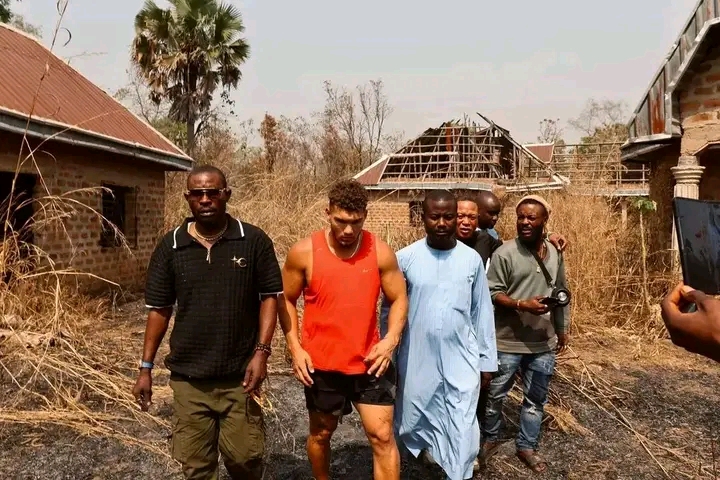
Barbir, who has been on the ground coordinating rebuilding efforts in the community, made the remarks during an inspection of the rebuilt Yelewata on February 2, 2026. He emphasized that his intervention was motivated by goodwill and deep concern for vulnerable Christian communities repeatedly affected by insecurity in the region.
While acknowledging the current temporary security presence in the area, Barbir questioned its sustainability and warned that any future attack would place full responsibility on state authorities. “There is security here now, but what happens if they leave in one or two months? I cannot come back and see Yelewata burned and people killed again. If that happens, you are liable. It is your job to protect your people,” he stated firmly.
He further declared that the government would bear the consequences if violence recurs, adding, “We came here in good faith, with good heart, to rebuild where nobody is helping. But the blood will be on your hands if Yelewata is attacked again.”
Barbir revealed that his humanitarian activities in Yelewata have the backing of the United States government, including support from U.S. Congressman Riley Moore. He disclosed that U.S. officials are fully aware of the previous attacks on the community, the ongoing reconstruction efforts, and his presence there. According to him, the geographical coordinates of Yelewata have been shared with U.S. authorities for monitoring purposes.
The American humanitarian appealed directly to state and local leaders to prioritize sustained security measures in the area to prevent a repeat of past tragedies. “Do your job. Protect your own people. Do not let anything happen to Yelewata again,” he urged.
His strong warning comes against the backdrop of persistent insecurity in rural parts of Benue State, where recurring attacks on communities like Yelewata have claimed lives, displaced residents, and destroyed homes and livelihoods. The reconstruction of the community represents a significant humanitarian effort, but Barbir’s statements highlight growing international concern over the long-term safety of such rebuilt areas and the adequacy of state-level security arrangements.
The development has drawn attention to broader challenges of farmer-herder conflicts, banditry, and communal violence in Nigeria’s Middle Belt, with calls for more durable solutions to protect vulnerable populations and ensure lasting peace in affected regions.