For too long, Benue State—Nigeria’s fabled “Food Basket”—has been a paradox of plenty. Fertile plains that could feed a nation, yet warehouses of unfulfilled promise. Rivers of potential dammed by decades of poor leadership, corruption, and divisive politics. Farmers abandoned, roads forgotten, hospitals hollowed out. The story was familiar, almost scripted: a state rich in soil and soul, repeatedly robbed of its harvest.
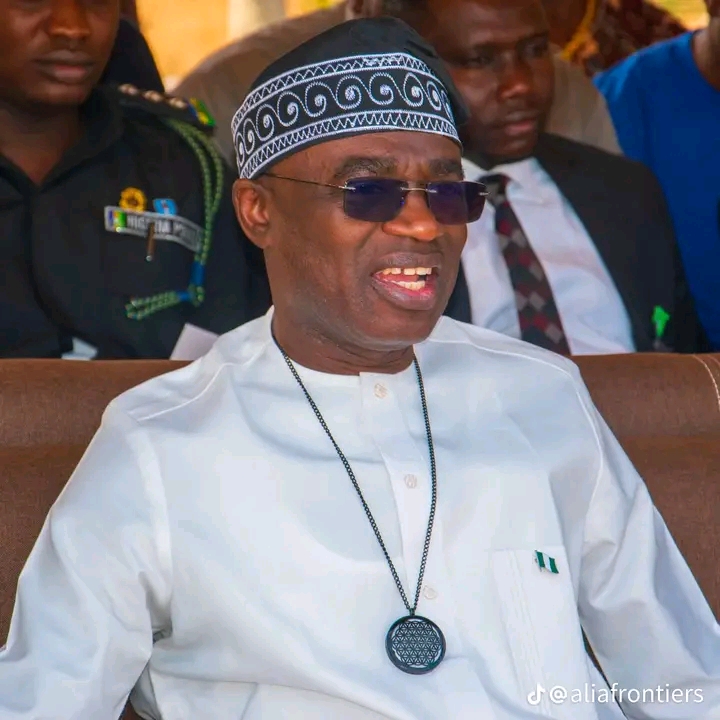
Then came 2023. And with it, Rev. Fr. Hyacinth Alia.
His emergence as governor was not just a political upset; it was a moral rupture. A priest stepping from the pulpit into the palace, carrying not a party flag but a promise of conscience. From day one, he made it clear: this would not be governance as usual. No more toeing the tired path of his predecessors. Integrity, discipline, and service—values honed in the confessional—would now guide the corridors of power.
And Benue, weary of stagnation, listened.
What Governor Alia has delivered in under three years is nothing short of a redefinition of governance. Not through grandstanding, but through deliberate, people-centered action.
He slashed through bureaucratic red tape like a machete through overgrown bush. Blocked leakages. Restructured processes. Made every naira count. Where past administrations treated governance like a private enterprise, Alia turned it into a public trust.
The results are visible—literally.
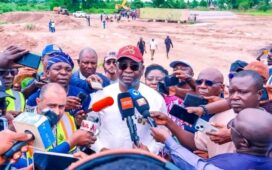
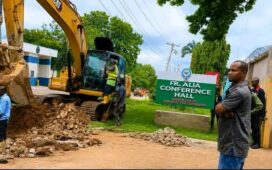
Drive from Makurdi to Gboko, Otukpo to Katsina-Ala, and you’ll see roads rising from decades of neglect. Abandoned rural tracks rehabilitated. New bridges under construction. Electricity reaching communities long resigned to darkness. Infrastructure is no longer a campaign slogan; it’s a lived reality.
But Alia’s vision runs deeper than asphalt and cables. It’s about dignity.
In education, schools are being rebuilt, teachers recruited, salaries paid—promptly. The state scholarship board, once a ghost, now supports students in science, technology, and agriculture—the engines of Benue’s renewal.
In healthcare, primary health centers are being revived and equipped. Immunization drives expanded. Maternal health prioritized. The teaching hospital in Makurdi is fast becoming a medical tourism hub. For the first time in years, Benue people are beginning to trust public hospitals again.
And in agriculture—the state’s heartbeat—Alia has launched an ambitious revival. Mechanization schemes. Improved seeds. Access to credit. Partnerships with private investors. From farm to factory, the administration is building an agro-industrial value chain that creates jobs, empowers rural communities, and positions Benue as Nigeria’s agro-economic powerhouse once more.
Perhaps most remarkably, Alia has done something few thought possible: he has united Benue.
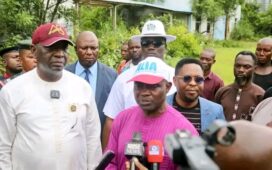
Political affiliation, religion, ethnicity—divisions that once fueled conflict—have been bridged by a message of inclusion. Traditional rulers consulted. Youth engaged. Civil society embraced. Even security has improved, with local networks strengthened and herder-farmer clashes significantly reduced. Displaced families are returning home. Banditry, once a daily dread, is receding.
This is not accidental. It is leadership by example—humility in power, inclusiveness in decision-making, peace as policy.
The Alia era is Benue’s golden chance. But greatness, as the governor often says, is never an accident. It is the product of shared vision, sacrifice, and hard work.
The people must complement his efforts. With civic responsibility. With patience. With cooperation. The private sector must invest. Citizens must protect what is being built. Politicians must rise above partisanship.
This is not just a governor’s project. It is a state’s second chance.
Truthfully, the Alia era may well be remembered as the period when Benue finally got it right—when integrity met leadership, when vision met action. When a priest-turned-governor reminded a state that its destiny was never poverty, but purpose.
Benue’s golden chance at greatness is here. The people must seize it. Cherish it. Nurture it. And never let it slip away again.
Sir Tersoo Kula, mnipr, is the Chief Press Secretary to Governor Hyacinth Alia.