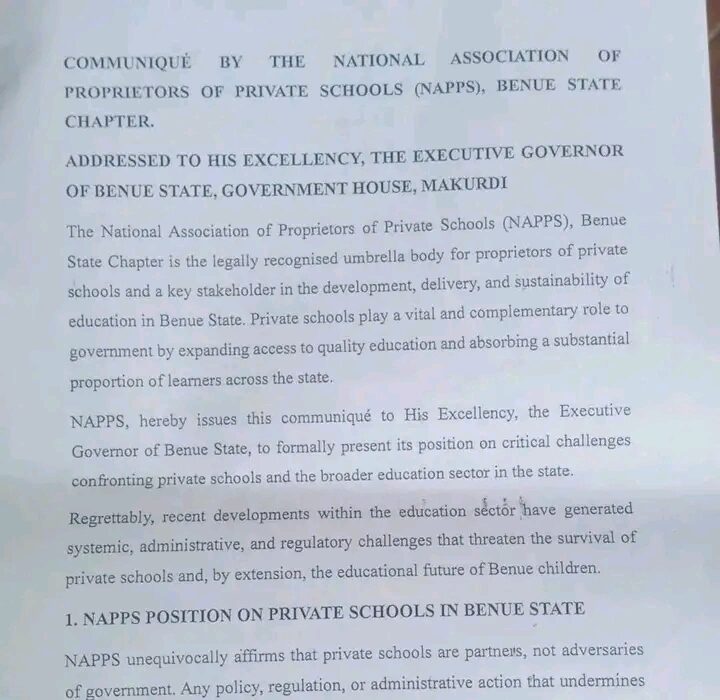
The National Association of Proprietors of Private Schools (NAPPS), Benue State Chapter, has given the Benue State Government a one-week ultimatum to immediately reverse what it calls exorbitant and illegal levies imposed on private schools operating across the state.
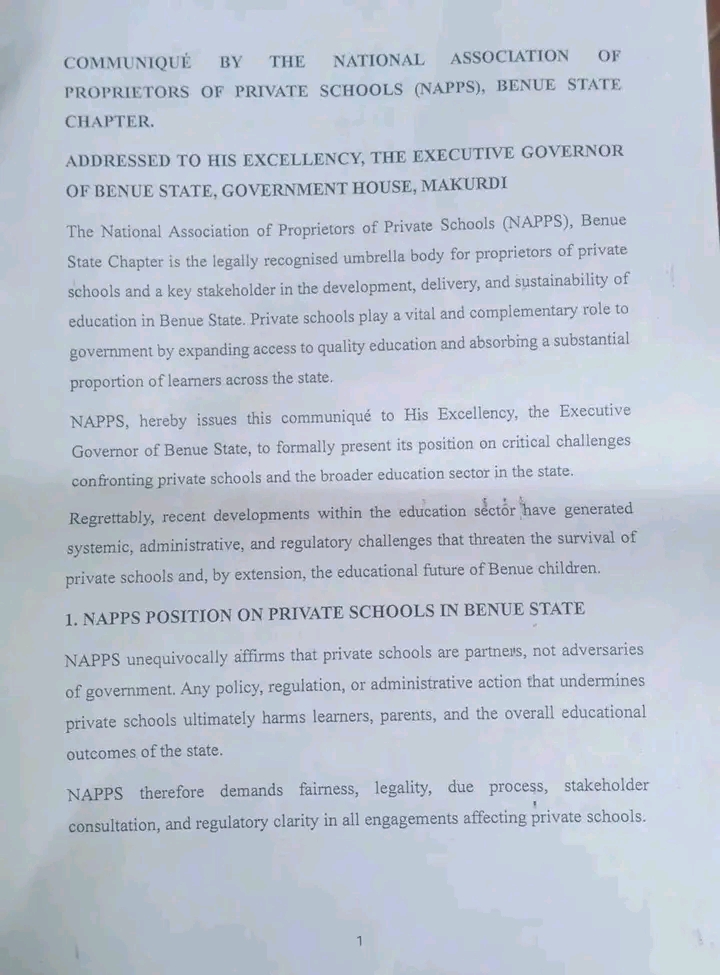
In a strongly worded statement released on Wednesday, January 29, 2026, the association accused the government of placing unbearable financial burdens on school proprietors through these levies, describing them as unauthorized, oppressive, and detrimental to the continued existence of private education in Benue.
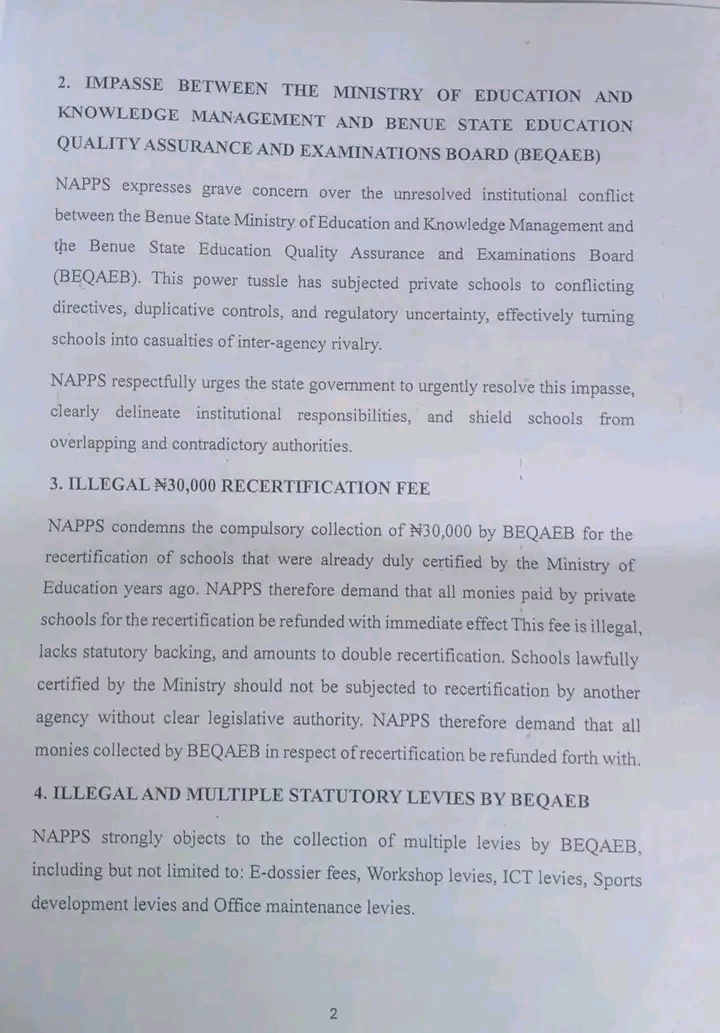
NAPPS warned that if the state government fails to address and revoke the contentious charges within the stipulated seven-day period, all private schools in the state will proceed with a total and comprehensive shutdown. Such a move, the group emphasized, would halt academic activities indefinitely and cause significant disruption for thousands of students, parents, and teachers who depend on private institutions for quality education.
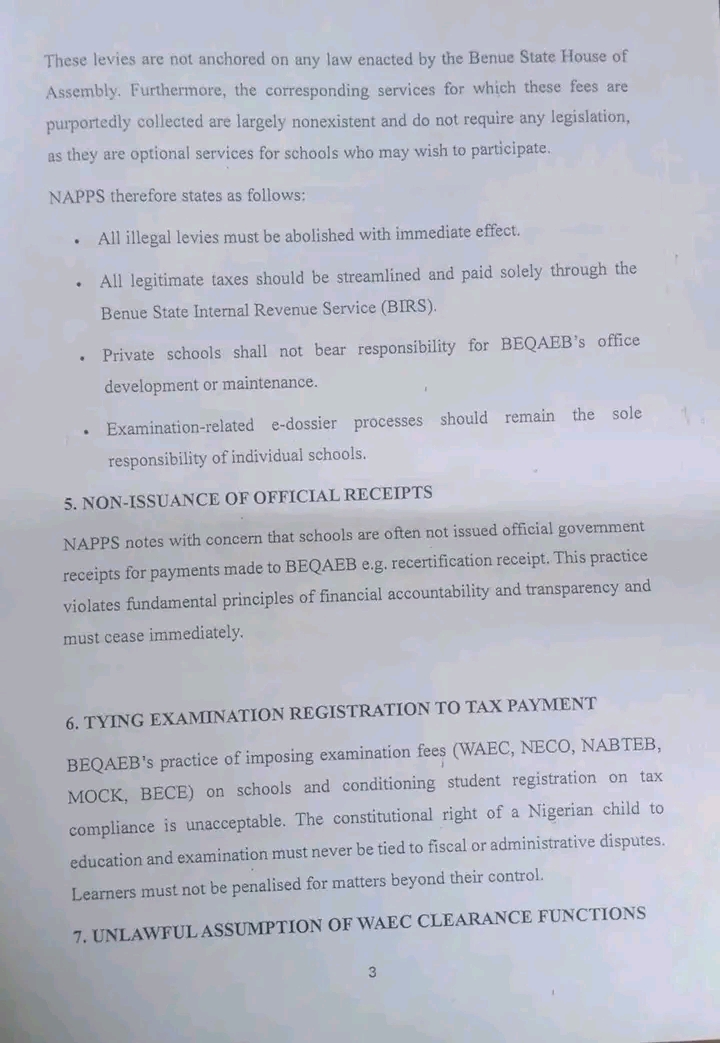
The association highlighted the severe economic pressure these levies have exerted on school owners, many of whom are already grappling with rising operational costs, inflation, and post-pandemic recovery challenges. It argued that the continued imposition of such fees threatens the sustainability of private schools, which play a vital complementary role to public education in the state by providing alternatives, employing thousands, and absorbing a large share of school-age children.
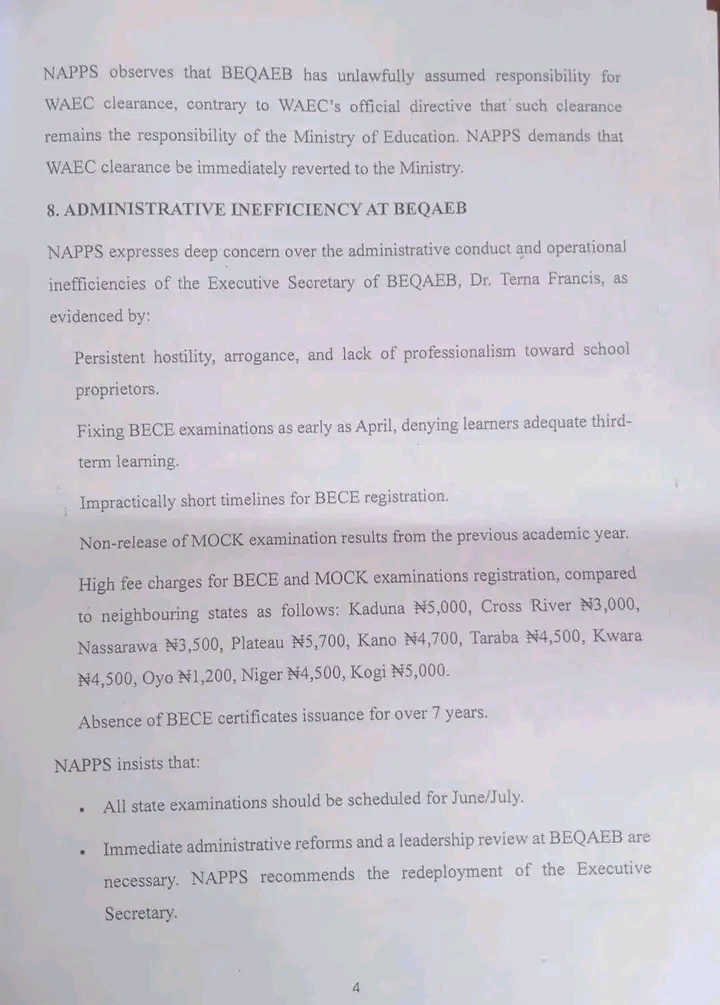
NAPPS called on the Benue State Government to act swiftly and engage in meaningful dialogue with stakeholders to avert what could become a major crisis in the education sector. The group stressed that any prolonged standoff would not only affect proprietors but also inflict hardship on parents forced to seek last-minute alternatives and on students whose learning would be interrupted at a critical time.
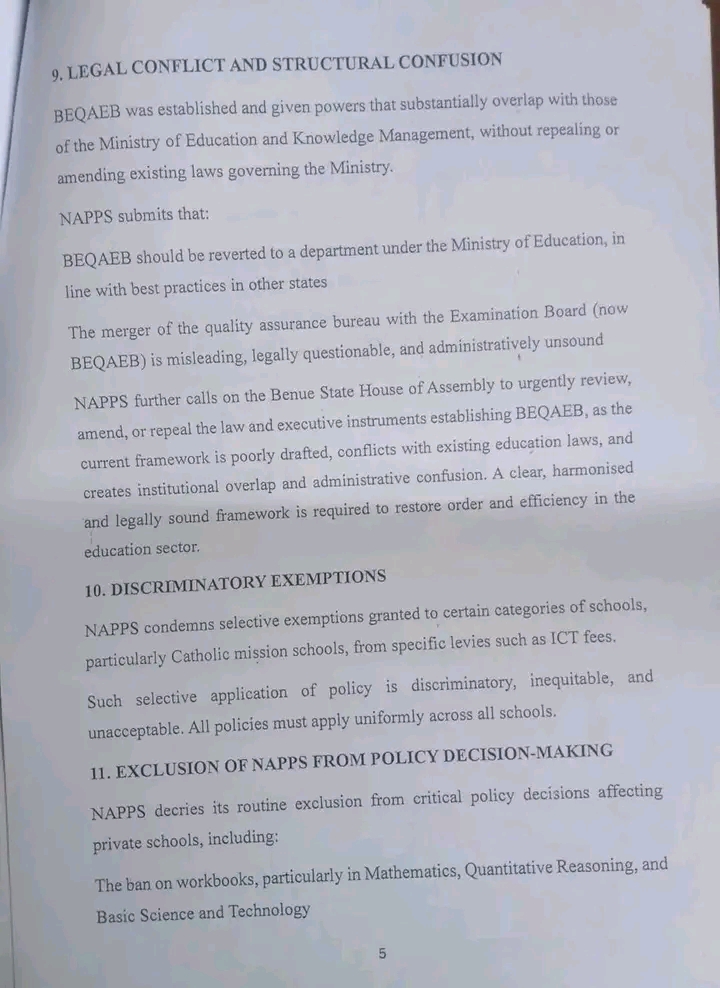
As the ultimatum clock begins ticking, attention now turns to how the state government will respond. Education stakeholders, parents, and civil society groups in Benue are closely watching developments, with many expressing concern over the potential for widespread disruption if the matter remains unresolved.
The looming threat of a mass shutdown underscores the deepening tensions between private school operators and regulatory authorities in the state, raising broader questions about funding, oversight, and the balance between government revenue generation and the viability of private educational institutions.