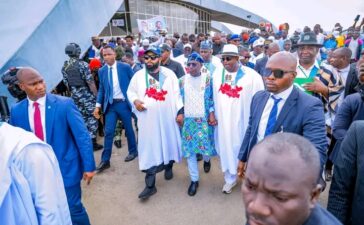
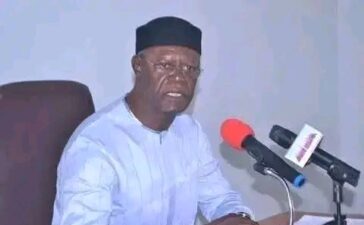
Former Benue State Governor Gabriel Suswam has reignited debate over power rotation in the state by declaring that Governor Hyacinth Alia should be re-elected in 2027 to complete eight years in office, while urging the Kwande Intermediate Area to wait until 2031 for its turn at the governorship.
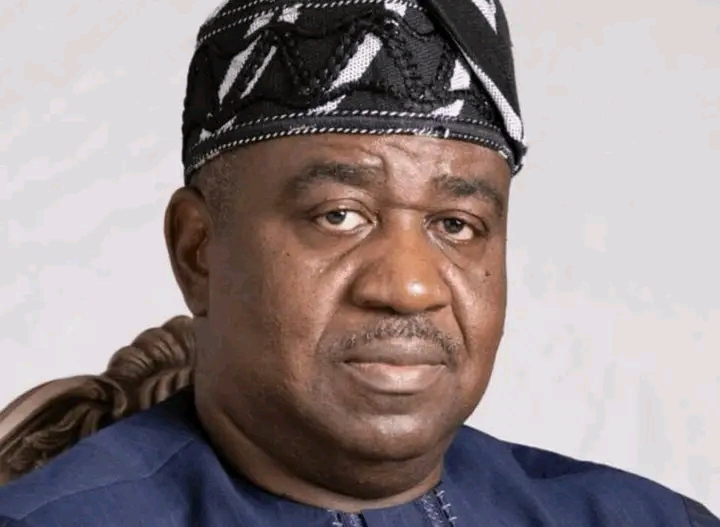
Speaking during a town hall meeting in Adikpo, headquarters of Kwande Local Government Area, as part of Governor Alia’s statewide thank-you tour of federal constituencies, Suswam argued that four years would not be enough for Alia to consolidate and complete the ongoing transformation of Benue. He noted that previous elected governors of the state were given the opportunity to seek second terms and maintained that Alia should enjoy the same privilege.
“The first executive governor of Benue State, Aper Aku, was re-elected for a second term, but a military coup truncated the administration, and from George Akume in 1999 to Gabriel Suswam to Samuel Ortom, Benue people re-elected us for second terms,” he said.
Suswam laid out a succession arrangement that would keep the governorship in Benue North-East beyond Alia’s tenure. He stated that the Jechira Intermediate Area in Zone A, through Governor Hyacinth Alia, should be allowed to complete its two terms. Kwande Intermediate Area should not contest against Alia in 2027, and in 2031 it will be the turn of Kwande to produce the governor.
“Governor Alia has performed beyond doubt, and there is a need to re-elect him,” Suswam said. He urged the people of Kwande not to back a governorship challenge against Alia in 2027 but to support the governor for a second term and wait until 2031 for their own opportunity. He also called on voters across the state to rally behind Alia in the 2027 election so the administration can consolidate its development programmes.
Alia hails from Vandeikya Local Government Area in the Jechira axis of Benue North-East, while the Peoples Democratic Party (PDP) governorship candidate, Michael Aondoakaa, SAN, is from Ushongo Local Government Area in the Kwande axis of the same senatorial district.
Suswam’s declaration effectively leaves out Benue South, also known as Zone C, despite longstanding agitation by political leaders and stakeholders from the senatorial district for power to shift to the area. Since Benue State was created in 1976, no elected governor has emerged from Benue South, a development that has continued to fuel complaints of political marginalisation and calls for power rotation to the zone. Governorship power in Benue has historically remained outside Benue South, despite the zone being one of the state’s three senatorial districts.
The former governor’s pronouncement is expected to generate reactions, particularly in Benue South, where there have been persistent calls for the governorship to move to the senatorial district. It also brings the question of power rotation back to the centre of Benue politics as the zone continues its push to produce an elected governor of the state.