Public commentary has intensified following the reported obstruction and alleged attack on Peter Obi during his visit to Benue State, with voices from different quarters seeking to clarify ethnic involvement and criticise the political handling of the episode.
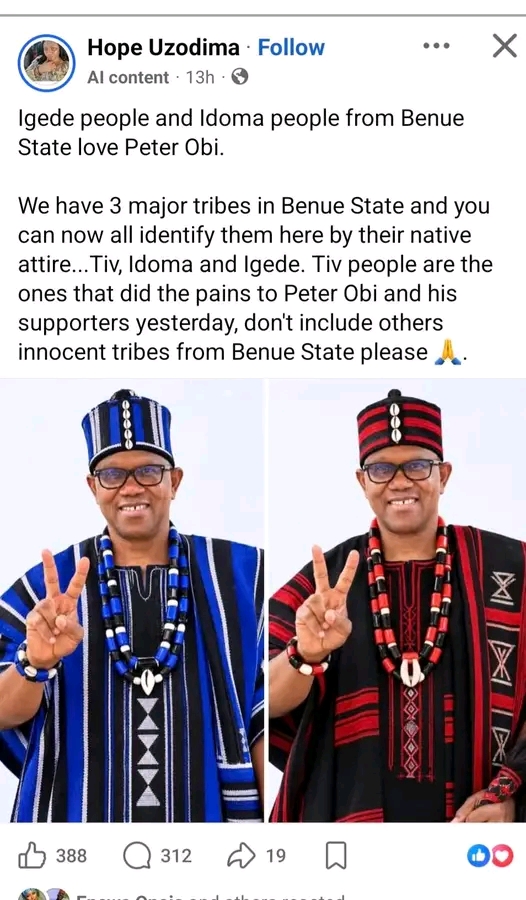
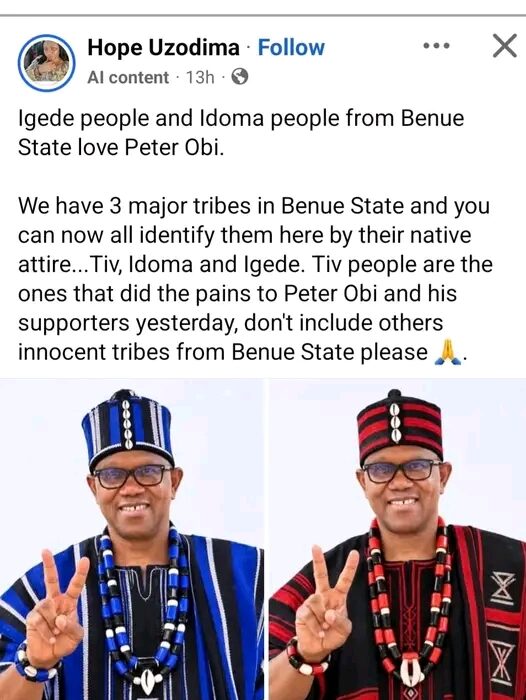
One widely shared post asserted that Igede and Idoma people of Benue State love Peter Obi and should not be lumped together with those responsible for the incident. It identified the three major tribes in the state as Tiv, Idoma and Igede, and claimed that Tiv elements were responsible for the difficulties faced by Obi and his supporters, urging others not to include the remaining tribes in any collective blame.
In a detailed reflection titled “My Thoughts on the Aftermath of Obi’s Attack in Benue,” commentator Amande S.M., a criminologist and media personality from Kwande Local Government Area, decried what he described as a barrage of attacks and negative labelling directed at Benue tribes because of the actions of a few overzealous individuals around the seat of power. He warned that the stereotyping of the Tiv people was alarming and worrisome, particularly the emerging narrative among some Igbo commentators that Tiv people do not like them, calling it a dangerous development that should concern every well-meaning person from the state.
Amande noted that Idoma communities had publicly pointed out that Obi visited Otukpo without incident, thereby distancing themselves from the events in Makurdi and portraying the blockade as a purely Tiv affair. He described this ethnic framing as unfortunate, insisting that the actions of a few individuals should never be allowed to represent an entire ethnic group.
He further observed that the incident, though negative, had placed Benue State on a global watchlist associated with thuggery and political violence, with the world now closely monitoring the state as it approaches the January and February general elections. The episode, he argued, had also exposed the quality of people around the governor, characterised by incapacity, lack of ideology, innovation and strategic political thinking.
According to the commentator, the “Alia generation” had started a fight it might not be able to finish. He suggested that Project Obi, previously a largely silent movement, had been inadvertently energised by the overzealousness of those around power in the state. He added that the federal authorities they sought to please now faced international scrutiny amid allegations that the opposition candidate was being muscled.
Amande concluded by stressing the need to save the state and offered special thanks to everyone who condemned the act, describing them as the genuine lovers of Benue.