The latest announcement by the Federal Government on its proposed National Ranching Policy has raised serious questions for Benue State questions which Governor Hyacinth Alia’s administration has a duty to answer.
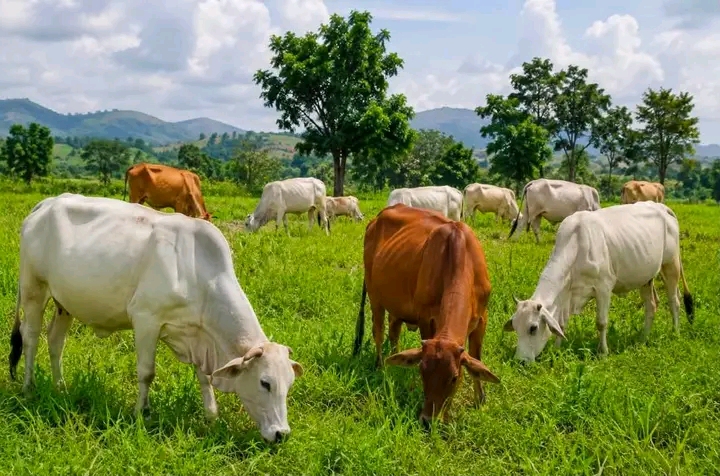
Minister of Livestock Development Idi Mukhtar Maiha has announced that Benue is among six identified “flashpoints” where the Federal Government intends to implement its new ranching programme. He also disclosed plans to rehabilitate 417 grazing reserves across the country and transform them into integrated livestock settlements complete with housing, schools, healthcare facilities, veterinary clinics, solar power, dams and other infrastructure. The minister identified Benue, Plateau, Nasarawa, Kaduna and Adamawa states, as well as the Federal Capital Territory, as priority areas for the intervention because of their history of farmers-herders conflicts. A pilot scheme has already begun in Plateau State to serve as proof of concept for a new livestock production model designed to reduce the movement of cattle and address one of the major triggers of rural conflicts.
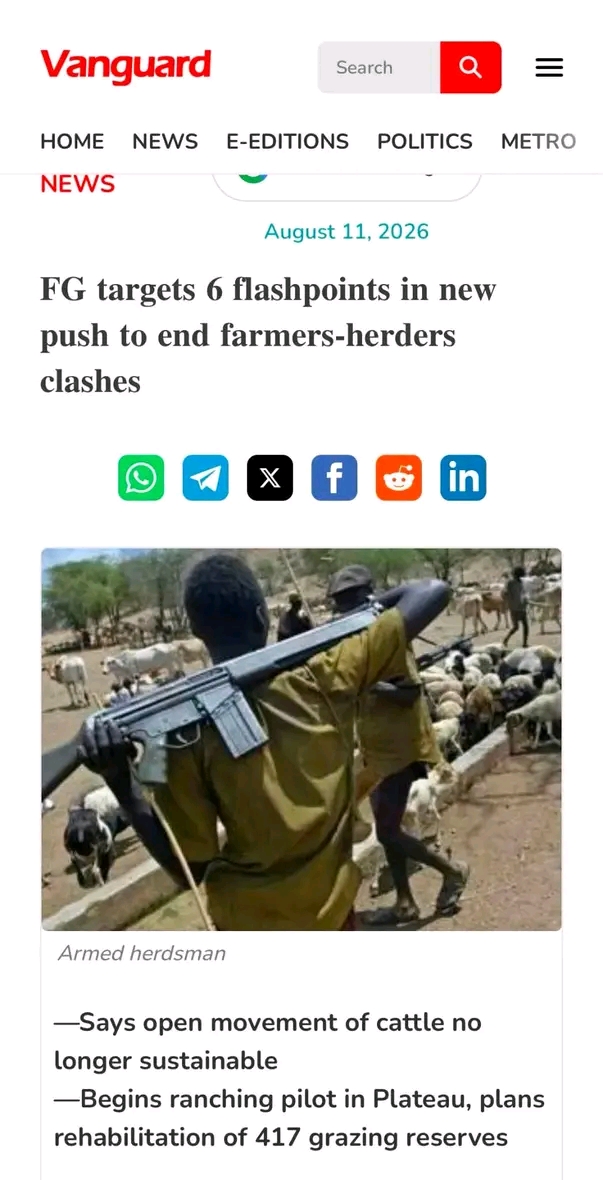
It is heartwarming to note that the Tinubu administration, unlike its predecessor, has admitted that open movement of cattle is no longer sustainable. That admission substantially vindicates what Benue people have maintained for years: modern livestock production must be based on ranching, not the uncontrolled movement of cattle across people’s farms and communities.
But that is precisely where the questions begin.
What exactly has the Benue State Government agreed to? Agriculture and livestock production are not matters over which the Federal Government can simply treat states as spectators. Agriculture is not on the Exclusive Legislative List in Nigeria. It falls under the Concurrent Legislative List. This means that both the federal government (the National Assembly) and state governments (the State Houses of Assembly) have the power to make laws regarding agricultural and industrial development.
More importantly, the Land Use Act vests land within a state (other than land belonging to the Federal Government or its agencies) in the Governor to hold in trust for the people, while non-urban land is generally under local government control. The Act specifically contemplates the allocation of non-urban land for agricultural purposes. Benue also has an existing law regulating livestock production: the Open Grazing Prohibition and Ranches Establishment Law.
So, Governor Alia’s administration needs to tell Benue people: Has the state formally signed up for the new ranching programme? If yes, under what terms? Where are the proposed ranches or “grazing reserves” to be located in Benue? Which local government areas and communities are involved? How many hectares of land are required? Who owns or presently occupies the affected land? Will land be acquired by the state and handed over for these settlements? And, crucially, what becomes of Benue’s existing Open Grazing Prohibition and Ranches Establishment Law?
These questions cannot be dismissed as politics. They go to the heart of land ownership, security, livelihoods and the constitutional responsibilities of the different tiers of government.
The most disturbing thing so far is the silence of the Benue State Government. Benue is specifically named as a priority state. Land is involved. Existing state legislation is involved. Communities are involved. Farmers are involved. Security is involved. Yet the people whose land and future may be affected have heard virtually nothing from their own government.