
Join our WhatsApp channel HERE for the latest Benue news and updates!
Food prices have taken another unpredictable turn at Aliade Market in Gwer Local Government Area of Benue State, with new figures revealing sharp fluctuations across key staple commodities. The latest market update, released on Wednesday, April 1, 2026, highlights rising costs and uneven price movements that could further strain household budgets.

The report, compiled by trader and market observer Mc Oliver Nyikyyaa, widely known as “De Busy Brain,” shows that several essential food items recorded significant price changes during the day’s trading.

Groundnut emerged as one of the most expensive commodities, selling between ₦75,000 and ₦80,000 per 50kg sack. Soya beans also matched the upper range at ₦80,000 per 50kg sack, signalling sustained pressure in the oilseed market.
Maize (both red and black varieties) was priced at ₦52,000 per 50kg sack, while white beans (green line) sold for ₦50,000 per Bagco. Guinea corn traded slightly higher at ₦55,000 per 50kg bag, with rice paddy maintaining a similar level at ₦50,000 per sack.

In the processed food segment, cassava chips were sold at ₦10,000 per bag, while yam chips reached ₦30,000 per bag, reflecting ongoing demand for alternative staples.

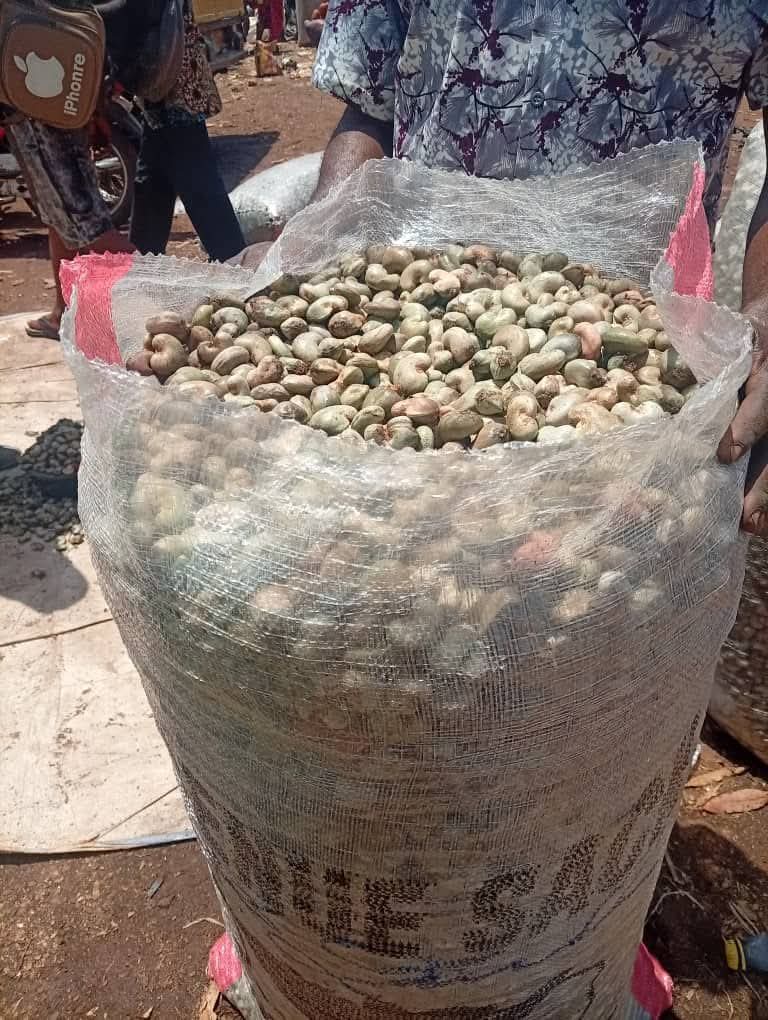
Melon (egusi), a key ingredient in many Nigerian homes, stood out with a steep price of ₦150,000 per 50kg sack. Cashew nuts followed closely at ₦140,000 per bag, with smaller rubber measures going for ₦5,000.
Fruit and household essentials showed relatively lower price points. A bag of oranges sold for ₦5,000, while a bag of akpu was priced at ₦2,500. A bottle of red oil went for ₦1,500.
Yam, however, remained a major investment item, with 100 tubers of the highest grade selling for a staggering ₦250,000 — one of the highest figures recorded in the current market cycle.
The fluctuating prices reflect ongoing supply and demand pressures, transportation costs, and seasonal factors affecting agricultural produce in Benue and beyond.
Market observers warn that if the volatility persists, consumers may face tighter spending conditions in the coming weeks, especially as traders continue to adjust prices in response to market realities.