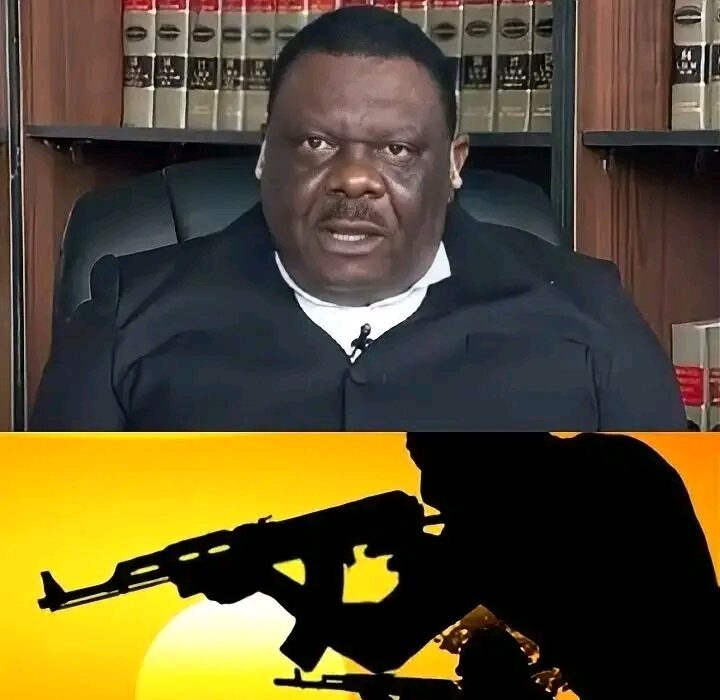
Peoples Democratic Party (PDP) governorship candidate Chief Michael Kaase Aondoakaa has drawn attention with his recent remarks on tackling insecurity in Benue State. While interacting with organised Benue citizens living in Lagos, Aondoakaa declared that if insecurity persists under his administration, he would not remain silent. He said he would “shout” to the President and continue crying out loudly so that the people would hear him.

The statement has prompted a broader discussion on whether public outcry alone can deliver security. Critics argue that security management is not measured by how loudly a governor speaks about insecurity, but by the ability to build an effective security architecture, coordinate intelligence, mobilise agencies, support operational deployments, protect vulnerable communities, disrupt criminal networks and create conditions for displaced people to safely return home.
Observers note that Benue has already experienced a period in which insecurity became a major political and national issue. During the administration of former Governor Samuel Ortom, the governor was one of the most outspoken critics of President Muhammadu Buhari over insecurity. Ortom repeatedly accused the Federal Government of failing to adequately protect Benue communities, made strong public statements about the activities of armed herders, and even took the matter beyond Nigeria by calling for international attention. Those statements generated enormous public attention, yet the fundamental security challenge did not disappear simply because the governor spoke loudly about it.
The lesson being drawn for the 2027 political debate is that a security crisis cannot be defeated through rhetoric alone. The real test, analysts say, is what happens on the ground: whether intelligence networks are functioning, whether security agencies receive timely and actionable information, whether vulnerable communities are protected before attacks occur, whether criminal groups are identified and disrupted, whether security forces are properly coordinated, and whether displaced communities and farmers can safely return to their homes and farms.
There is a fundamental difference, the argument goes, between advocacy for security and security governance. A governor can demand military intervention and speak to the international community, generating attention and political pressure. But a state governor must also work within the constitutional security framework available to a state government—developing strong coordination with the Nigerian Army, Police, DSS, Civil Defence, local authorities and community structures; supporting intelligence gathering; identifying emerging threats; improving communication between communities and security agencies; and directing resources toward preventing attacks rather than merely reacting after lives have been lost.
Current Governor Hyacinth Alia has repeatedly attributed improvements in the state’s security situation to collaboration between the state government, the Federal Government and security agencies. In June 2025 he stated that about 17 of Benue’s 23 local government areas had initially been under siege, a figure later reduced to nine, then six, and eventually three. By March 2026 he again noted that approximately 17 LGAs had faced serious security threats when his administration came into office, while only three were experiencing minimal threats at that point, emphasising collaboration with the military and the need for residents to provide useful intelligence. While recent attacks show that serious challenges remain, the point being made is that security should ultimately be judged by measurable outcomes rather than the volume of political statements.
As the 2027 conversation intensifies, the central question being posed is not who can cry louder in Abuja, but who has presented the clearest, most accountable and operationally credible plan for protecting the people of Benue State.