Join our WhatsApp channel HERE for the latest Benue news and updates!
A viral social media post highlighting the current price of garri at Korinya Market in Konshisha Local Government Area has drawn fresh attention to the economic pressures facing farmers and traders in Benue State, often referred to as Nigeria’s food basket.

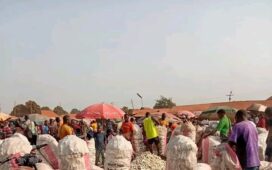
According to a Facebook update shared earlier today by D’naked Elder Sughnennen Yaaya, a bag of garri was selling for ₦16,000 at the bustling Korinya Market. The post, accompanied by images of large sacks of the popular staple food and traders at work, described the situation as worrying and called on the Ministry of Commerce and Industry to step in with urgent support for local farmers.

“Pray for Benue farmers,” the post read. “Bag of garri 16k at Korinya Market, Konshisha LGA, Benue State today. Ministry of Commerce and Industry need to help Benue farmers.”
Garri, a cassava-based product that remains a daily essential for millions of Nigerian households, has seen fluctuating prices in recent months due to a combination of factors including high production costs, transportation challenges, insecurity in farming communities, rising input prices (especially fertiliser and fuel), and seasonal supply variations.
Benue State, known for its vast farmlands and significant contribution to national food production, continues to grapple with these issues despite being one of the country’s leading producers of cassava, yam, rice, and other crops. Farmers and traders in rural markets like Korinya often bear the brunt of market volatility, with high transport costs and middlemen further squeezing margins.
The ₦16,000 price tag for a standard bag has prompted renewed calls for government intervention, including subsidies on farm inputs, improved access to credit, better rural road networks, and enhanced security to allow uninterrupted farming activities. Many residents and commentators responding to the post echoed the sentiment, urging relevant authorities to address the rising cost of living and support smallholder farmers who form the backbone of the state’s agrarian economy.
As food inflation remains a national concern, developments in markets across Benue continue to serve as important barometers of the challenges confronting agricultural households and consumers alike.