Join our WhatsApp channel HERE for the latest Benue news and updates!
Something quietly monumental began on Tuesday morning inside the gleaming new Banquet Hall of Government House, Makurdi: the Benue State Government opened a three-day Executive Project Management Workshop for every heavyweight in the administration, from State Executive Council members, permanent secretaries, and heads of MDAs to legislators and directors who hold the actual levers of implementation.

This is not another talk-shop. The language from the opening ceremony was blunt: too many good policies die not from lack of vision but from weak coordination, poor planning, inadequate risk management, and zero consequence for slippage. The Alia administration has decided that 2026 and beyond will not repeat that story.

Deputy Governor Dr. Sam Ode, standing in for Governor Hyacinth Alia, told the packed hall that the workshop was born out of a deliberate choice to move from rhetoric to measurable results. “Every kobo of public funds must now produce visible outcomes,” he said, thanking participants for accepting to “retool” themselves in service of the people.

Head of Civil Service Dr. Moses Agbobo Ode did not mince words either. He described the training as long overdue surgery on the persistent cancers eating public-sector delivery: “We have the policies, we have the budget, but we keep failing at the last mile because we lack modern execution skills.” His charge to the senior officers was simple, approach the next three days with the seriousness of people who know they will be held accountable.
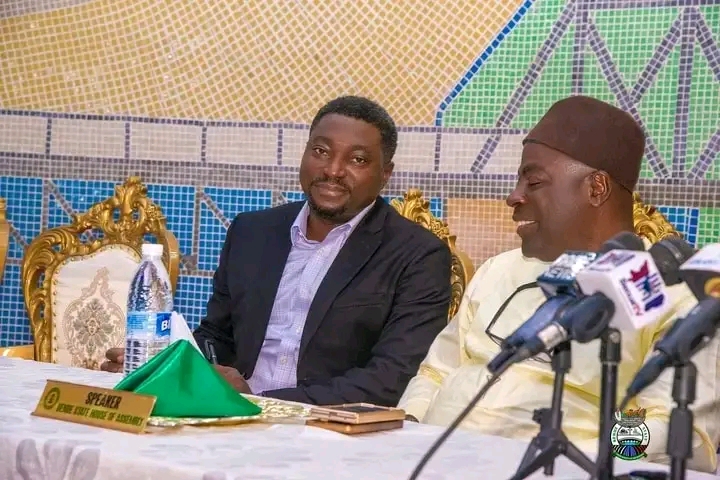
Perhaps the most revealing moment came from the Director-General of the Benue State Planning Commission, Jerome Andohol, who announced that the state has already rolled out the Medium-Term Sector Strategy (MTSS) in four critical sectors (education, health, social protection, and WASH) and is preparing to add more. “We are hunting for knowledge here,” he told the hall. “The knowledge you gain will directly sustain and improve the effectiveness of our MDAs.”
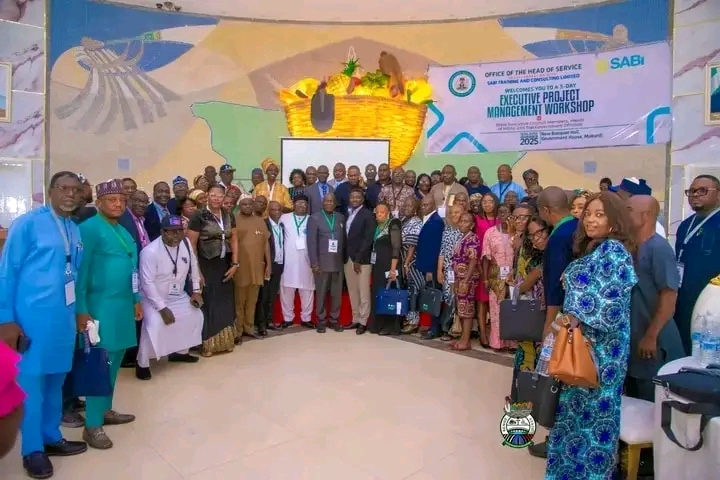
Secretary to the State Government Barr. Deaconess Sermun Deborah Abeh framed it in even starker terms: no development vision survives without a disciplined, competent, and coordinated public service. “We must think one Benue,” she repeated, urging political appointees and career civil servants to bury whatever silos still exist.
The lead consultant, Mr. Terver Keugh of SABI Training and Consulting Limited, laid out the curriculum with clinical precision: project definition, risk identification, change management when funds dry up or crises hit, structured monitoring, and adaptive delivery, all anchored on the globally respected Project Management for Development methodology. His core message was that most government projects do not fail because leaders lack passion; they fail because nobody taught the implementers how to finish.
By the time the workshop closes on Thursday 20 November 2025, every commissioner, permanent secretary, and agency head in Benue will leave with new tools, clearer reporting lines, and a sharper understanding that the governor’s seven-point agenda will now be tracked with the same rigor private companies use to protect shareholder value.
For a state that has sometimes been mocked for starting loud and finishing quiet, this feels different. The officials are not being sent to Dubai or Abuja for the training; it is happening right under the dome of Government House, in full view of the citizens they serve. The message is unmistakable: results, not ceremonies, are now the only currency that counts.
If this workshop achieves even half of what it has set out to do, the next set of project commissioning ceremonies in Benue might actually happen on schedule, within budget, and to the specifications written on paper.
And that would be a revolution in itself.