Join our WhatsApp channel HERE for the latest Benue news and updates!
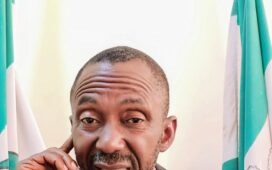
Prominent human and gender rights advocate Ukan Kurugh has issued a strong public statement declaring his refusal to comply with any harassment or demands from the Nigeria Police Force regarding his vehicle’s tinted glass permit, citing possession of a valid permit and the pendency of a related court case.

In a detailed post shared on social media, Kurugh, who describes himself as a “Voice of the Voiceless” and “Messenger of Necessity,” asserted that he is in lawful possession of a tinted glass permit issued by the appropriate authority. He argued that enforcement actions by the police while the matter remains sub judice violate constitutional principles of governance and the separation of powers.

Kurugh invoked Sections 6(6)(b) and 287(1)-(3) of the 1999 Constitution, emphasizing that judicial powers are vested exclusively in the courts and that all authorities, including the police, must obey court decisions. He contended that no executive agency, particularly law enforcement, has the authority to act in a way that prejudices or undermines ongoing judicial proceedings.
The advocate highlighted the Nigerian Bar Association’s (NBA) legal action against the Inspector-General of Police, noting that the NBA has instituted proceedings challenging the tinted glass permit policy and threatened contempt charges over recent police announcements to resume enforcement from January 2, 2026. Kurugh criticized what he described as a pattern where security agencies disregard court authority in pursuit of revenue, often at the expense of citizens’ rights.
In a defiant tone, he warned that should the police proceed with actions disregarding the Constitution and court processes, they should be prepared to arrest him, as he is fully ready to assert his constitutional rights and seek legal redress. He concluded by affirming that the rule of law, not executive overreach, must prevail as the foundation of Nigeria’s democracy.
Kurugh’s statement comes amid heightened tensions over the controversial policy, which the police justify on security grounds but critics, including the NBA, decry as potentially extortionate and unconstitutional while the lawsuit remains unresolved. The development underscores growing public and professional frustration with perceived inconsistencies in law enforcement practices.