Join our WhatsApp channel HERE for the latest Benue news and updates!
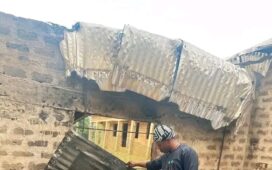
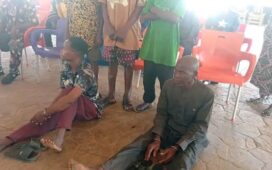
The Benue State Government has formally unveiled a comprehensive resettlement framework for displaced residents of Yelwata community, targeting dignified recovery and eventual return to ancestral homes following last year’s devastating attack by suspected armed herders.

Secretary to the State Government (SSG), Barr. Deaconess Deborah S. Aber, made the announcement during a press briefing at Government House, Makurdi, on Wednesday. She disclosed that the State Executive Council (EXCO) had approved the initiative as part of a broader strategy to restore social stability, rebuild livelihoods, and rebuild confidence among affected populations.
The physical phase of the project is scheduled to be flagged off on Thursday, January 22, 2026, at a purpose-built site within Yelwata. The location was deliberately chosen to keep displaced persons in close proximity to their original settlements, allowing continued access to farmlands, family networks, and local markets.
Aber explained that the resettlement adopts an internationally recognised United Nations post-conflict resettlement model, which prioritises community proximity, phased reintegration, and the provision of essential services to support sustainable recovery. The land for the project was provided by the local government to fast-track implementation and alleviate displacement fatigue among residents.
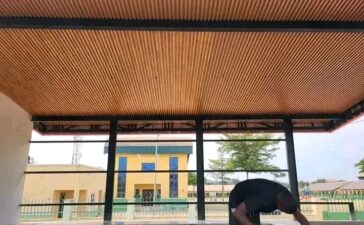
In its first phase, the scheme will deliver 62 two-bedroom housing units, each equipped with sanitary facilities, designed to accommodate families currently living in temporary camps. The housing layout emphasises safety, privacy, and functionality, going beyond basic shelter to create a livable and dignified environment that supports long-term recovery.
Funding for the programme, amounting to approximately ₦1.275 billion, was mobilised through donations following the Yelwata incident. This includes a ₦1 billion contribution from the First Lady of Nigeria, Senator Oluremi Tinubu, CON, via the Renewed Hope Initiative, alongside support from other public-spirited individuals and organisations.
To guarantee transparency and accountability, Governor Hyacinth Iormem Alia constituted a dedicated oversight committee chaired by the SSG. The committee’s mandate covers financial supervision as well as continuous community engagement with displaced persons and host communities.
The SSG noted that consultations with affected residents and host communities informed the prioritisation of needs into immediate, medium-term, and long-term categories. Emergency interventions already implemented include school enrolment for displaced children, provision of basic relief materials, and restoration of access to healthcare and sanitation services.
Infrastructure readiness is advanced, with the Water, Sanitation, and Hygiene (WASH) component already completed. Solar-powered boreholes have been installed to ensure reliable access to clean water, a measure described as vital for disease prevention, personal dignity, and community wellbeing.
Aber clarified that the Yelwata resettlement is designed as a transitional solution, not a permanent relocation. The government remains committed to collaborating with security agencies and community leaders to address root causes of displacement and create conditions for residents’ safe and voluntary return to their ancestral homes.
“The objective is not just to rebuild structures, but to rebuild trust, livelihoods, and social cohesion,” she stated, stressing that sustainable peace is the cornerstone of long-term development in conflict-affected areas.
She described the project as a potential template for future humanitarian and recovery interventions across Benue State, combining transparent fund management, community participation, and infrastructure development within a unified policy framework.
The SSG called on development partners, civil society organisations, and the private sector to complement government efforts, noting that post-crisis reconstruction demands shared responsibility and sustained investment. She assured the public of regular progress reports, reaffirming that transparency, accountability, and citizen engagement will guide the administration’s approach to recovery and development.