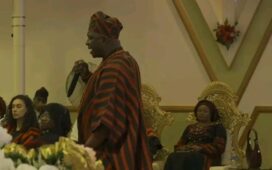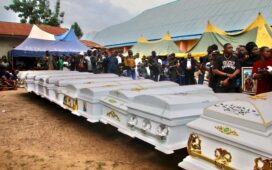
In a poignant yet controversial scene on Tuesday, February 10, 2026, children who had reportedly lost their parents and relatives to repeated attacks by suspected armed Fulani herders were seen singing praises for Benue State Governor, Hyacinth Iormem Alia, during his visit to Kwande Local Government Area.
The children, many identified as survivors from households directly devastated by the violence, stood under the intense afternoon sun performing songs in honor of the governor. The event took place as part of the state government’s outreach to communities grappling with insecurity, displacement, and loss of life in recent months. Governor Alia’s visit followed a surge in attacks that have left several people dead and forced numerous families to flee their homes across affected areas in the local government.
Eyewitnesses and local observers described the moment as emotionally charged, with the young singers appearing to express gratitude and hope directed at the state leadership. However, the display quickly drew mixed reactions from residents and community watchers.
Several voices expressed deep concern over the involvement of traumatized children in such a public ceremonial activity. Critics noted that many of the youngsters are still processing the violent deaths of family members and questioned the decision to have them participate outdoors in harsh weather conditions. They argued that the focus should instead be on providing immediate psychosocial support, trauma counseling, and protection rather than ceremonial participation.
The governor’s tour was intended to demonstrate solidarity with victims of insecurity and to assess the impact of ongoing violence in Kwande and surrounding regions. Supporters of the administration view the children’s performance as a genuine expression of appreciation for government attention to their plight. Detractors, however, maintain that symbolic gestures fall short without tangible follow-through.
Local commentators and rights advocates emphasized the broader humanitarian crisis, calling for urgent, concrete steps including strengthened security deployments to prevent further attacks, emergency relief for displaced families, and specialized care for child survivors who have been orphaned or widowed in their young lives.
As of the time of this report, efforts to obtain an official response from the Benue State Government regarding the concerns raised about the children’s participation and welfare had not yielded any statement.
The incident highlights the complex intersection of grief, politics, and public response in communities long battered by herder-farmer clashes and banditry in Nigeria’s Middle Belt. While Governor Alia’s presence offered a moment of visibility for the affected families, many residents insist that lasting peace and healing will depend on sustained security measures and comprehensive support rather than one-off visits.